





Top Tips for Improving Your Sports Photography
It is no surprise that many people want to get into sports photography. For some, it might be mixing your passions. For others, it is simply the natural drama and excitement that sports can produce. Being able to capture those moments is very attractive, and the good news is that there are plenty of opportunities to do so.
Sports photography is not limited to Super Bowls, World Cups, and other major league events. Those types of occasions will attract huge numbers of fans, the media, and the interest of online betting sites, but there is a whole host of other sports events happening every single day that are just as worthy of your attention.
Securing your pass to photograph the Super Bowl will be difficult if you do not already have a wealth of experience. But these top tips for sports photography are helpful when capturing the action from all levels of sports. Use them as you work a local high school football game while you learn the trade.
Know Your Sport
When you are photographing anything, it is advantageous to know your subject, and that is particularly true when it comes to sports. You may well be able to capture the action well without doing much homework, but if you are already a fan of the game, you will instinctively be able to anticipate the best moments to shoot.
As a sports fan, you will already have innate knowledge of what the athletes are trying to achieve – and how they will go about that. Sometimes capturing the perfect shot is complete luck, but many times the preparation involved is the magic ingredient. Having some knowledge of what is going on will give you a good head start.
Shutter Speed
Most sports take place at high speed, so the conventional wisdom for most sports photography is to always use a fast shutter speed. The general consensus is that the faster the sport, the faster the shutter speed required. But it really depends on what kind of image you are after.
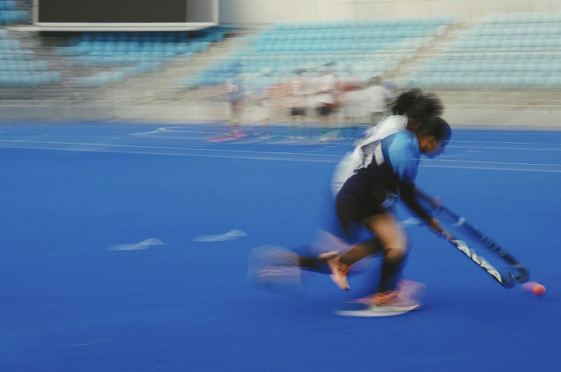
Most traditional media outlets will require crisp and concise sports photography, so a fast shutter speed is beneficial. But if you are not restrained by those parameters, you should experiment with slower shutter speeds to create a feeling of movement. Sports is all about movement and action, and a more unconventional shot can sometimes achieve that.
Change Angles
The rules of sports photography will dictate that you should always have the subject facing you. There is a reason why you will usually see the press pass photographers grouped at the end zone, behind the goal line, or near the basket. But varying your angles and shooting positions can produce some memorable images.
The best shots are those that stand out from the rest, and that may mean a different angle or position to begin with. Shooting from lower than normal can make basketball athletes seem even taller, while shooting from higher levels can give you an image that evokes the scale of sports. Play around to get the shot you want, not what might be expected.
Look Away From the Action
It should be repeated: if you are photographing a sports event for a publication, you may well have a strict set of guidelines of what is expected, so you should always go along with the brief of the job. But if you are looking to expand your style or just create more interesting pictures, you should use the freedom.
Although the sports action will generally be happening on the field or court in front of you, there will always be something of interest by looking the other way. Fans are as much a part of live sports as the athletes, so turn to them for inspiration from time to time. Some of the most memorable sports shots come away from the action itself.
Go Wide
Some of the best sports photos are those where you train in on the athletes, getting as close to the action as possible. Capturing the strain and effort put in with a zoom typifies sports itself, but there is also much to be said for going as wide as possible with your photography.
By going wide, you are able to bring the whole experience to your audience. It can sometimes say more about the sports on show when you include everything that is going on around it. There is also an opportunity to use a wide aperture here as well, blurring out the background and creating a real focus on the athletes themselves.
Respect the Environment
It is always very tempting to move into a position that will get you the shot that no other photographer is able to get, but it should never be at the cost of getting in the way of what is going on. A good photographer is there to observe what is going on, not to become part of the action itself.
Always respect the officials, coaches, athletes, and even the fans when you are photographing sports. You may be after a piece of art, but they are there for the sport. Being able to shoot at a sports event should be treated as a privilege, so you should always be as respectful as possible.
Tell a Story
No matter what your shooting brief is, you should always be looking to tell a story with your sports photos. It could be the look on the face of an athlete making a winning shot, or it could be the thousands of fans celebrating the win, your job is to capture the moment and tell the story of what happened.
Gaining more and more experience is the only real way that your sports photography will improve. But following some of these tips should help you on that journey.
